BEMM129 was certainly one of my more interesting module choices for this master’s programme. It marks the first time at University where I was confronted with a learning experience that was solely digital, a major departure from the more traditional physical lecture-oriented teaching style that is prevalent at the University of Exeter. One of the more interesting aspects of the module was that it instigated proper discussion and peer analysis of the content produced between classmates in the form of mandated comments on each blogpost alongside commentary on the shared MOOC. This enabled each module participant to gain a wider scope of knowledge on a variety of different topics pertaining to the digital economy.
The first blogpost assignment had us analysing the impact of the digital economy on a given career or job sector. Consequently, my first comment was on a blogpost relating to the impact of digitisation on the education sector. The blogpost outlined a number of trends occurring in this sector whilst also examining several key online education platforms alongside positing potential future outcomes for education (Fagan, 2020). My own reading on the subject had me convinced that the future of education lay in a hybrid approach with a human teacher making use of a digital platform (Warschauer, 2007). I chose to make my second comment on a post focusing on the future of marketing in the digital economy (Cirou, 2020), this seemed to be a pertinent choice as it reflected my own selected topic, with both of us coming to the shared conclusion that modern marketing had become predominantly based around digital marketing (Cvitanovic, 2018).
The second blogpost assignment invited us to evaluate the manner in which a business had found success via the utilisation of a digital business model. The organisation I chose to investigate was TransferWise. The information I gained from this investigation led me to comment on a blog post concerning the Funding Circle, a service which utilised a similar P2P lending application (Norrell, 2020). This aided me in gaining a greater commercial awareness regarding developments in fintech (Aladwani, 2001). My second comment on this assignment dealt with a post which introduced me to Wish, an online e-commerce platform of which I had previously been completely unaware (Morrill, 2020), thus further expanding my knowledge base in regard to dynamic digital industries.
Overall, my time with BEMM129 was highly enlightening in that the module adequately encouraged us to interact with the works of our peers, thus exposing me to a wider range of knowledge and topics than just those I had looked into individually.
Bibliography:
Aladwani, A. M. (2001). Online banking: a field study of drivers, development challenges, and expectations. International Journal of Information Management, 21(3), 213-225.
Cvitanovic, P. (2018). Navigating New Marketing Technologies, Channels and Metrics. Managing Global Transitions: International Research Journal, 16(4), 379-400.
TransferWise is a money transfer service with a host of banking related features which has led to it being labelled as a neobank akin to Monzo or Revolut (Khayrallah, Radia, Hickey, Singh & Xu, 2015). Initially founded in 2011, the Fintech start-up swiftly rose to prominence, attracting high profile investors such as Richard Branson (O’Hear, 2014) and Max Levchin whilst also receiving numerous accolades from relevant media outlets and authorities (Johnson, 2012). The described mission of the firm is to bring about ‘’money without borders’’ by providing a service which is instantaneous, convenient, transparent and affordable (TransferWise, 2017). As of 2019, the company has reported a profit of $12.7 million alongside a 53% growth in annual revenue at $230 million. Overall, the company has been valued at $3.5 billion and has seen its number of users double since last year to over 6 million people proving that the service is not only viable but successful (O’Hear, 2019). This level of successful growth from a primarily digital service represents a significant challenge to traditional banking and exchange services.
Traditionally, banks and currency exchange vendors charge an average rate of 5% in proportion to the amount of money being exchanged, on top of this a transfer fee is also in place (IBAN, 2020). Additionally, many banks have hidden fees in order to hike up the rate of exchange, increasing the price of an overseas transfer. The timeframe involved in wiring money overseas from one currency to another typically takes around 2 working days (TransferWise, 2020). TransferWise attempts to break this formula by utilising a digital approach. The service makes use of an innovative peer-to-peer exchange system. This effectively cuts out a middle broker and the subsequent fees involved. For example, when a user is transferring euros into dollars the software will match them with a counterpart who is doing the opposite, thus substituting both currencies at a rate that can be up to eight times cheaper than a traditional bank transfer (Einav, Farronato & Levin, 2016). For this service TransferWise charges only a transfer fee that, depending on currency, is nominally cheaper than traditional exchanges. As money in the digital age is kept mostly as data (Aladwani, 2001), TransferWise ensures that the exchange is nearly instantaneous with currency arriving in a user’s account in seconds. This unique selling-point which utilises digital technology to provide a solution to outdated financial mechanisms has served to compound TransferWise’s success, allowing them to provide a service which outclasses that provided by their more traditional and much larger competitors.
The service itself, is also streamlined via its presence on a digital app allowing a customer to manage all of their banking and transactions from their phone. Whilst traditional banks do provide mobile banking options, a normal bank account will generally only work to full effectiveness in one country and within one currency. In contrast the TransferWise app allows for one to have balances in nearly 50 currencies alongside the unrestricted usage of 6 major currencies which they can use for domestic transfer between normal bank accounts and also for currency exchange between both their own accounts and accounts belonging to others (TransferWise, 2019). Effectively, the application allows for a bank account that is truly borderless with a user being able to exchange currencies on the fly whilst also transferring locally at a speed unmatched by traditional services. A debit card can also be provided upon request which can be used to make payments and withdraw cash (TransferWise, 2018). This card is connected to the multiple balances of the TransferWise account, for example, if a user is withdrawing physical cash in France and has a balance of euros then they would be withdrawing euros free of charge whilst simultaneously if they wished to order something online from the United States using their dollar balance then this would all take place using the same account.
This has made the service an invaluable resource for those who live and work in multiple countries with it being easier than ever to pay remittances and manage different currencies. Consequently, the company has become one of the world’s leading remittance services (Ng, 2019). TransferWise has also brought about several business-oriented features such as allowing for third party payment processing. As someone who works seasonally in the United States, I have found TransferWise to be reliable and simple to use, allowing me to transfer the vast majority of the dollars I have earnt into pounds and euros with ease at a reasonable rate. The wide variety of currencies available also makes it ideal for travelling, with it being simple to create a balance for an upcoming holiday whilst also providing the option to exchange currency quickly without a physical brokerage. All one needs is an internet connection in order to manage their multi-currency account that, excluding the card, is entirely-software based.
Overall, one can see TransferWise as a company fully capitalising on the Digital Revolution by using new technologies in order to provide a business model that completely disrupts pre-established institutions in the financial sector. The service provided by TransferWise represents an attempt to establish a banking system that more accurately reflects the international realities of the modern world which has led to the firm enjoying a great degree of initial success.
Aladwani, A. M. (2001). Online banking: a field study of drivers, development challenges, and expectations. International Journal of Information Management, 21(3), 213-225.
Einav, L., Farronato, C., & Levin, J. (2016). Peer-to-peer markets. Annual Review of Economics, 8, 615-635.
One would be hard pressed to find an industry that has been more rapidly altered by the emergence of the digital economy than marketing. A marketing executive from thirty years ago would be astounded by the dynamic changes and new opportunities within the field brought about by a move towards digitisation (Verma, 2018). Consequently, marketing agencies and departments around the world have found themselves having to adapt and reorganise at a rapid pace in order to meet the new demands of an increasingly digital world.
Marketing can be seen as the manner in which a company creates and promotes the value of its products within the perception of its customers (Durmaz & Efendioglu, 2016). The traditional responsibilities of a marketing executive would have been the development and promotion of a brand identity around a product. This would be brought about by a number of methods such as the designing and launching of various advertising campaigns. These would be distributed by physical advertisements in magazines and newspapers alongside printed flyers and even large billboards, the advent of the television and radio provided a further medium through which marketing could be utilised. In some fields, marketing executives would be responsible for organising and hosting large promotional events and meetings to showcase the features of a new product to an audience of potential buyers. Marketing executives would also be responsible for carrying out large scale demographic research in order to locate and focus upon new customers for the expansion of a brand’s outreach.
During my tenure as an intern at the marketing department of a large healthcare supply company I found that whilst the core duties and aims of a marketing executive had not changed, the manner in which they are now being carried out is a far cry from marketing in the past. Long-term industry veterans would inform me that there has been a palpable push if not a rush towards digitisation in firms presiding over a large variety of industries. As the healthcare supply industry is a specialist market, this transition was not as fast as it would have been in a more traditional marketing department for a larger consumer market. Thus, the department was in somewhat of a limbo between becoming fully digitised and retaining a few holdouts from more dated marketing techniques such as still using paper mail. This served to highlight the sheer disparity between marketing then and marketing now.
Mad Men; a popular show depicting a 1960s marketing firm. Retrieved from: madmen.fandom.com
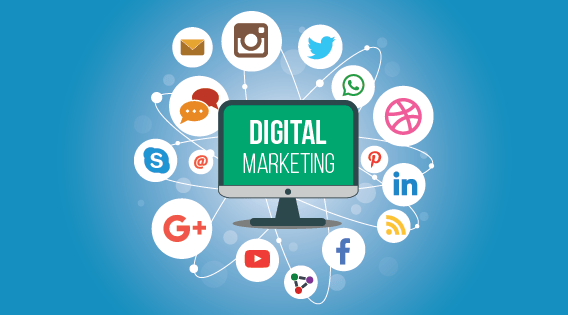
The advent of the Internet and the digital economy have essentially created a whole new platform upon which to carry out marketing. I found that the modern marketing executive would be spending as much time, if not more, analysing and compiling data onto numerous Excel spreadsheets than they would ever spend on managing physical print advertisements. Brand outreach was almost solely facilitated via the use of the Internet and its subsequent digital resources. Digital marketing may have started off as a more niche concept, but it has now become the primary focus of most modern marketing departments (Knight, 2017).
Email served as the first stepping-stone in the rise of digital marketing, allowing for adverts to be sent directly to a customer at no extra cost as opposed to the costs found in traditional postage and delivery services. This would then give way to the presence of adverts on websites themselves, allowing for the advertisement of any product to a potential audience at an unprecedented scale. The rise of social media has also been of great impact to modern marketing strategies with many of the new duties of a marketing executive being related to the cultivation of a brand image alongside enhanced customer outreach on various social media platforms (Kumar, 2015). Consequently, many marketing executives are already finding themselves having to undergo comprehensive relearning activities in order to become acclimatized to handling new digital mediums. A notable example of this encountered during my internship was a marketer who had taught himself to code in HTML in order to better approach advert concept design.
The future of marketing clearly lies in the continuation of this progression towards digitisation. However, the role of a marketing executive in this future is less certain. Machine-learning and coded algorithms in concert with the effective collection of data analytics are leading to an increased incidence of automation within the field. New algorithms can allow for advertising preferences to be tailored to an individual at an unprecedented level of accuracy, facilitating the effective marketing of numerous products to customers without requiring a marketing executive to implement a marketing campaign. Thus, many of the core duties of a marketing executive could easily be undertaken by intelligent software. However, this is not to suggest that the role will disappear in its entirety, the creative aspects of marketing will still require the unique talents of the human mind which have yet to be replicated by software (Autor, 2015).
Autor, D. (2015). Why Are There Still So Many Jobs? The History and Future of Workplace Automation. The Journal of Economic Perspectives,29(3), 3-30.
Durmaz, Yakup & Efendioglu, Ibrahim Halil. (2016). Travel from Traditional Marketing to Digital Marketing. Global Journal of Management and Business Research: E Marketing. 16. 241-248.
Kumar, V. (2015). Evolution of Marketing as a Discipline: What Has Happened and What to Look Out For. Journal of Marketing. 79(1), 1-9.
Verma, Deepak. (2018). A Critical Review of Digital Marketing. International Journal of Management, IT & Engineering. 8. 321-339.
Hello there! My name is Jonah Harrison and I am currently pursuing an MSc in International Management at the Univeristy of Exeter. I am originally from a town in Kent called Sevenoaks but I moved overseas at a young age and have grown up primarily in Dubai and the south of Spain. Prior to undertaking my Masters degree I was studying a BA in History and Philosophy. This also took place at the University of Exeter. Philosophy and History have always interested me in the ways in which they have influenced cultural trends and shaped various societies. I chose to pursue a Masters in a more business oriented topic in order to add more versatility to my CV whilst boosting my overseas employability.
Over the course of the following weeks I shall be writing about digital business models and how developments and innovations within this field have led to a great degree of disruption in traditional business models whilst also serving to enable many others to pursue new opportunities and ventures. Writing these posts shall aid me in developing my overall awareness and understanding of digital businesses as a whole, helping to prepare me for an everchanging market in which these advances are clearly playing a major role.








 The Digital Hub