One would be hard pressed to find an industry that has been more rapidly altered by the emergence of the digital economy than marketing. A marketing executive from thirty years ago would be astounded by the dynamic changes and new opportunities within the field brought about by a move towards digitisation (Verma, 2018). Consequently, marketing agencies and departments around the world have found themselves having to adapt and reorganise at a rapid pace in order to meet the new demands of an increasingly digital world.

Marketing can be seen as the manner in which a company creates and promotes the value of its products within the perception of its customers (Durmaz & Efendioglu, 2016). The traditional responsibilities of a marketing executive would have been the development and promotion of a brand identity around a product. This would be brought about by a number of methods such as the designing and launching of various advertising campaigns. These would be distributed by physical advertisements in magazines and newspapers alongside printed flyers and even large billboards, the advent of the television and radio provided a further medium through which marketing could be utilised. In some fields, marketing executives would be responsible for organising and hosting large promotional events and meetings to showcase the features of a new product to an audience of potential buyers. Marketing executives would also be responsible for carrying out large scale demographic research in order to locate and focus upon new customers for the expansion of a brand’s outreach.
During my tenure as an intern at the marketing department of a large healthcare supply company I found that whilst the core duties and aims of a marketing executive had not changed, the manner in which they are now being carried out is a far cry from marketing in the past. Long-term industry veterans would inform me that there has been a palpable push if not a rush towards digitisation in firms presiding over a large variety of industries. As the healthcare supply industry is a specialist market, this transition was not as fast as it would have been in a more traditional marketing department for a larger consumer market. Thus, the department was in somewhat of a limbo between becoming fully digitised and retaining a few holdouts from more dated marketing techniques such as still using paper mail. This served to highlight the sheer disparity between marketing then and marketing now.
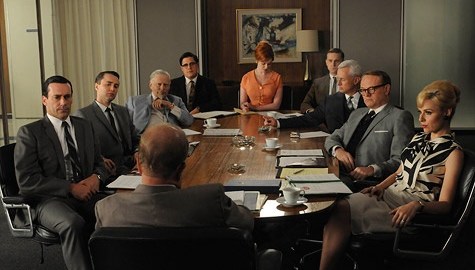
The advent of the Internet and the digital economy have essentially created a whole new platform upon which to carry out marketing. I found that the modern marketing executive would be spending as much time, if not more, analysing and compiling data onto numerous Excel spreadsheets than they would ever spend on managing physical print advertisements. Brand outreach was almost solely facilitated via the use of the Internet and its subsequent digital resources. Digital marketing may have started off as a more niche concept, but it has now become the primary focus of most modern marketing departments (Knight, 2017).
Email served as the first stepping-stone in the rise of digital marketing, allowing for adverts to be sent directly to a customer at no extra cost as opposed to the costs found in traditional postage and delivery services. This would then give way to the presence of adverts on websites themselves, allowing for the advertisement of any product to a potential audience at an unprecedented scale. The rise of social media has also been of great impact to modern marketing strategies with many of the new duties of a marketing executive being related to the cultivation of a brand image alongside enhanced customer outreach on various social media platforms (Kumar, 2015). Consequently, many marketing executives are already finding themselves having to undergo comprehensive relearning activities in order to become acclimatized to handling new digital mediums. A notable example of this encountered during my internship was a marketer who had taught himself to code in HTML in order to better approach advert concept design.
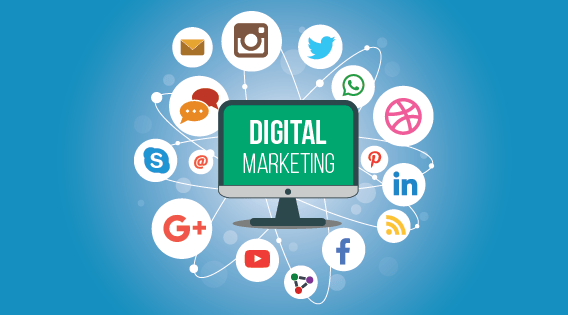
The future of marketing clearly lies in the continuation of this progression towards digitisation. However, the role of a marketing executive in this future is less certain. Machine-learning and coded algorithms in concert with the effective collection of data analytics are leading to an increased incidence of automation within the field. New algorithms can allow for advertising preferences to be tailored to an individual at an unprecedented level of accuracy, facilitating the effective marketing of numerous products to customers without requiring a marketing executive to implement a marketing campaign. Thus, many of the core duties of a marketing executive could easily be undertaken by intelligent software. However, this is not to suggest that the role will disappear in its entirety, the creative aspects of marketing will still require the unique talents of the human mind which have yet to be replicated by software (Autor, 2015).

Sources:
Autor, D. (2015). Why Are There Still So Many Jobs? The History and Future of Workplace Automation. The Journal of Economic Perspectives, 29(3), 3-30.
Durmaz, Yakup & Efendioglu, Ibrahim Halil. (2016). Travel from Traditional Marketing to Digital Marketing. Global Journal of Management and Business Research: E Marketing. 16. 241-248.
Kumar, V. (2015). Evolution of Marketing as a Discipline: What Has Happened and What to Look Out For. Journal of Marketing. 79(1), 1-9.
Verma, Deepak. (2018). A Critical Review of Digital Marketing. International Journal of Management, IT & Engineering. 8. 321-339.
Warren Knight. (2017). The Digital Transformation Battle Between Sales & Marketing. Available at: https://warren-knight.com/2017/08/07/digital-transformation-battle-sales-marketing/
 The Digital Hub
Hey Jonah, this was a really enjoyable and an interesting read. Marketing has always been an immensely powerful tool for many companies and a good marketing campaign can make a company successful. We are now living in a world that drives on technology and has been heavily disrupted by it, whether in the field of marketing or any other business. Companies and marketers are constantly finding better ways to market their products in order to gain competitive advantage or profitability and I believe that collecting data and analysing it has been really useful for the companies. Do you think that Data analytics has a huge scope and people seeking to pursue careers in marketing should develop new skills and techniques?
LikeLike
An excellent comment Vishesh, I concur completely. I honestly believe that data analytics has given rise to such a dynamic pace in development that skill relearning shall certainly be incredibly relevant in the near future.
LikeLike